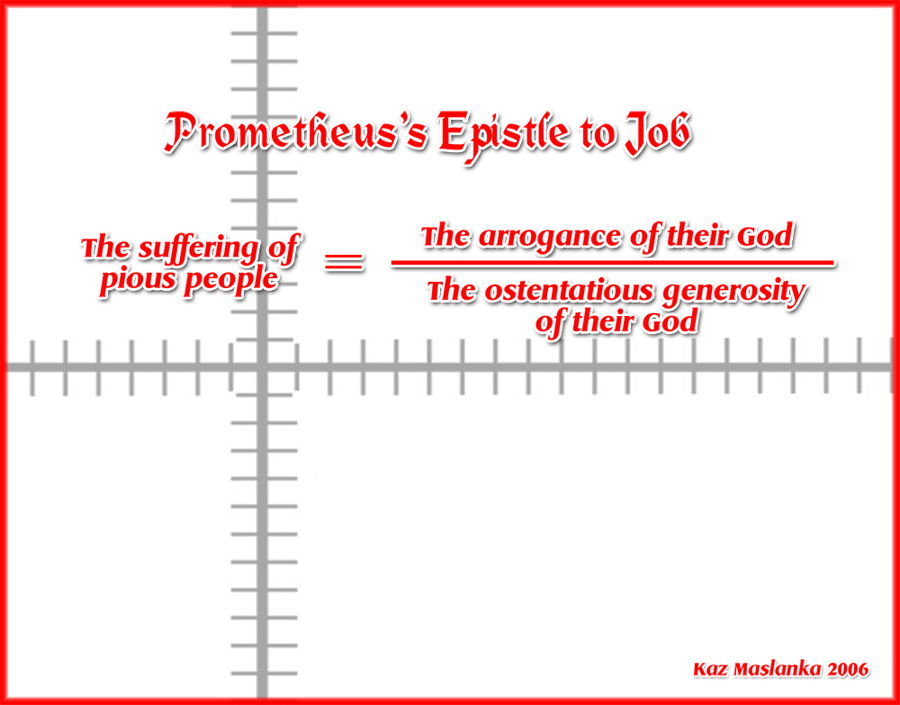
Prometheus’s Epistle to Job
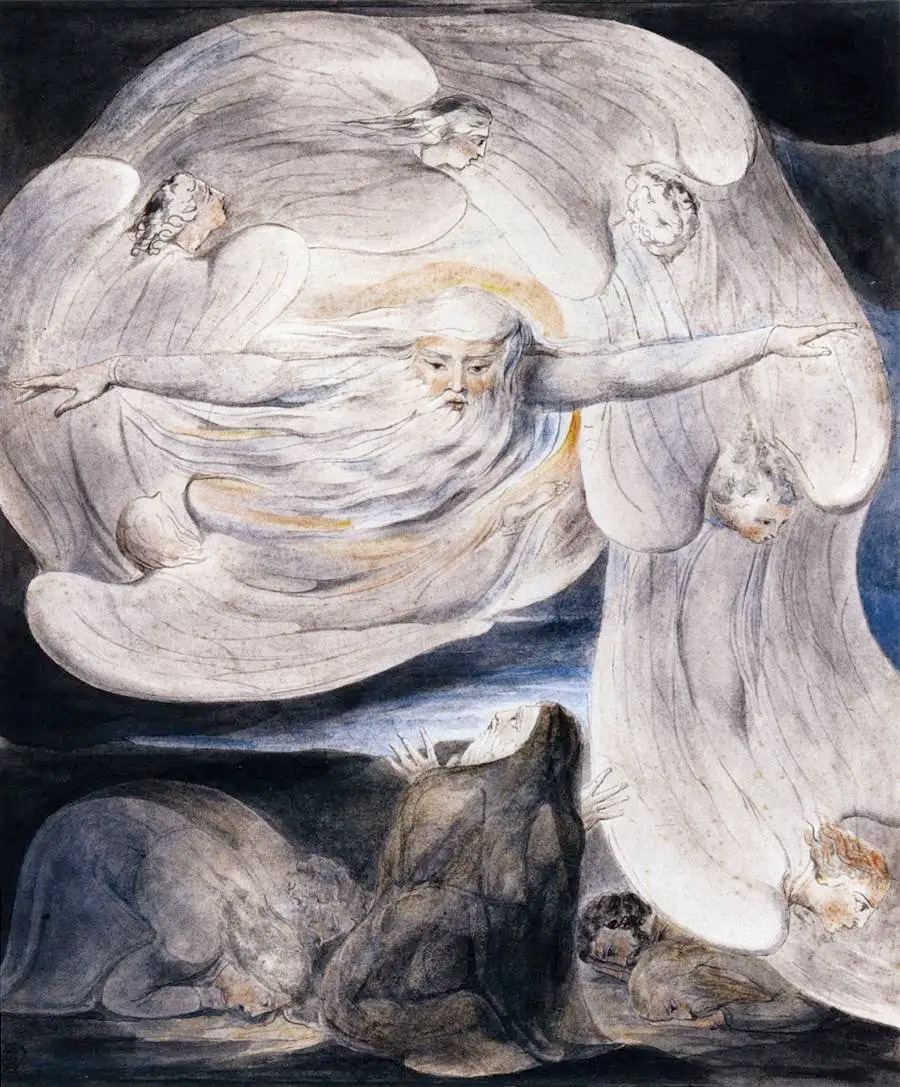
There are two men who suffer not by accident, but by decree.
Yahweh boasts to Satan that Job is a model of perfection and devotion. Satan scoffs, suggesting that such loyalty means little when it has never been tested. In effect, Yahweh responds: watch this.
So Job is reduced to ash. His skin is broken, his children are gone, and his world is dismantled piece by piece. He lifts his face not in defiance, but in anguish, and asks the only question left to him:
Why?
Why strip the innocent?
Why crush the faithful?
Why create a man only to dismantle him?
And from the whirlwind, Yahweh answers — not with comfort, but with scale, with force, with a voice that does not explain so much as overwhelm:
Where were you when I laid the foundations of the earth?
Have you commanded the morning?
Can you bind the chains of the Pleiades?
The answer is not an answer. It is a dismissal — a declaration that the question itself is beneath the architecture of power. Job falls silent; not because he understands, but because he is outmatched.
Across the divide, Prometheus hangs in the open sky, his body torn daily by consequence, his crime the elevation of mankind against the will of Zeus. For this, Zeus devises a punishment of exquisite cruelty: each day an eagle descends to devour Prometheus’s liver, and each night the liver grows back so that the torment may begin again.
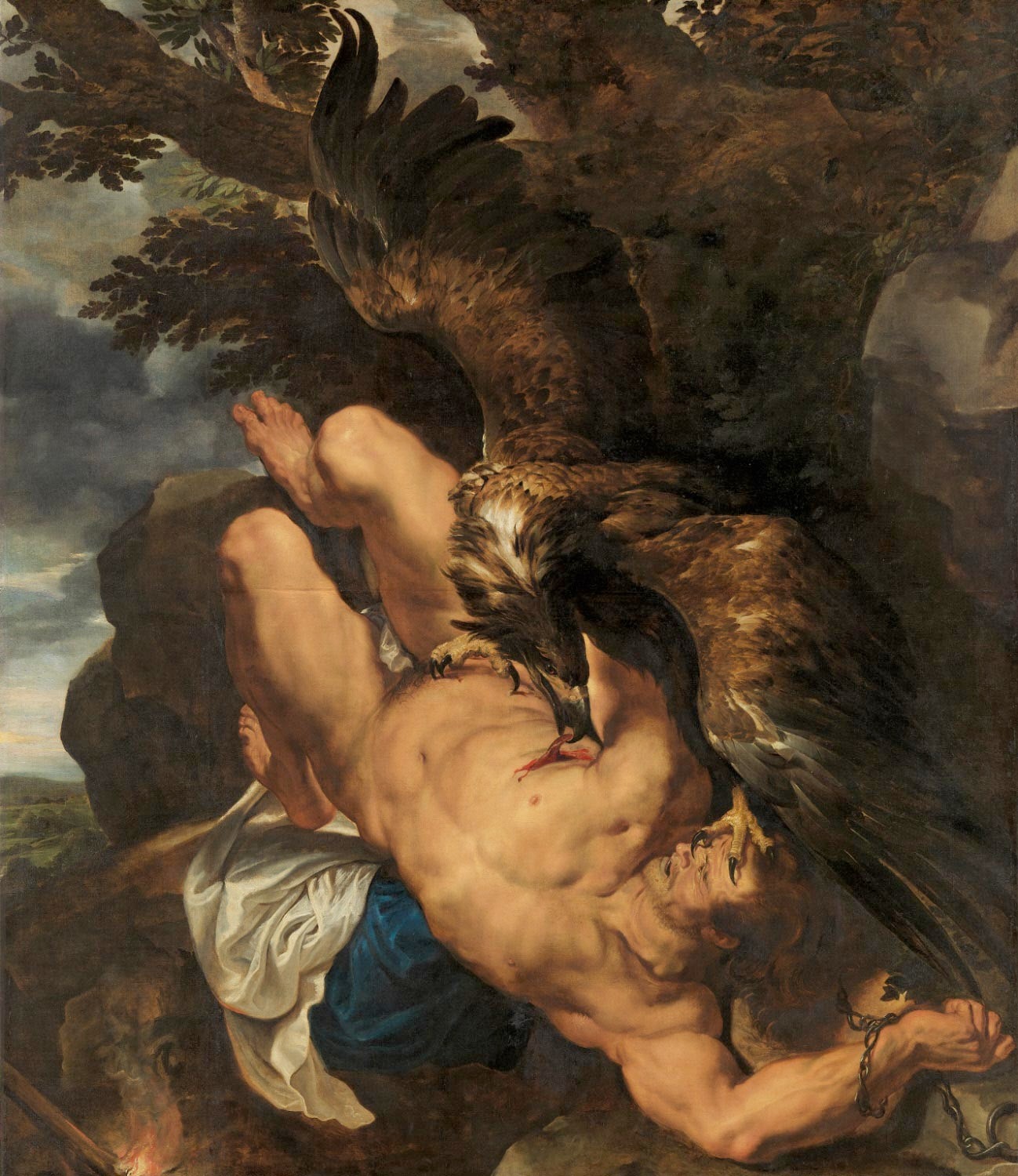
Yet Prometheus too is visited — so the story goes — by one who offers a solution:
Bend. Apologize. Yield — and this ends.
Prometheus laughs.
Not softly. Not nervously.
But with the full contempt of one who has already chosen.
An apology? For fire?
For giving men the means to think, to build, to see?
He would sooner feed the eagle himself.
There is no why in Prometheus — only: I would do it again.